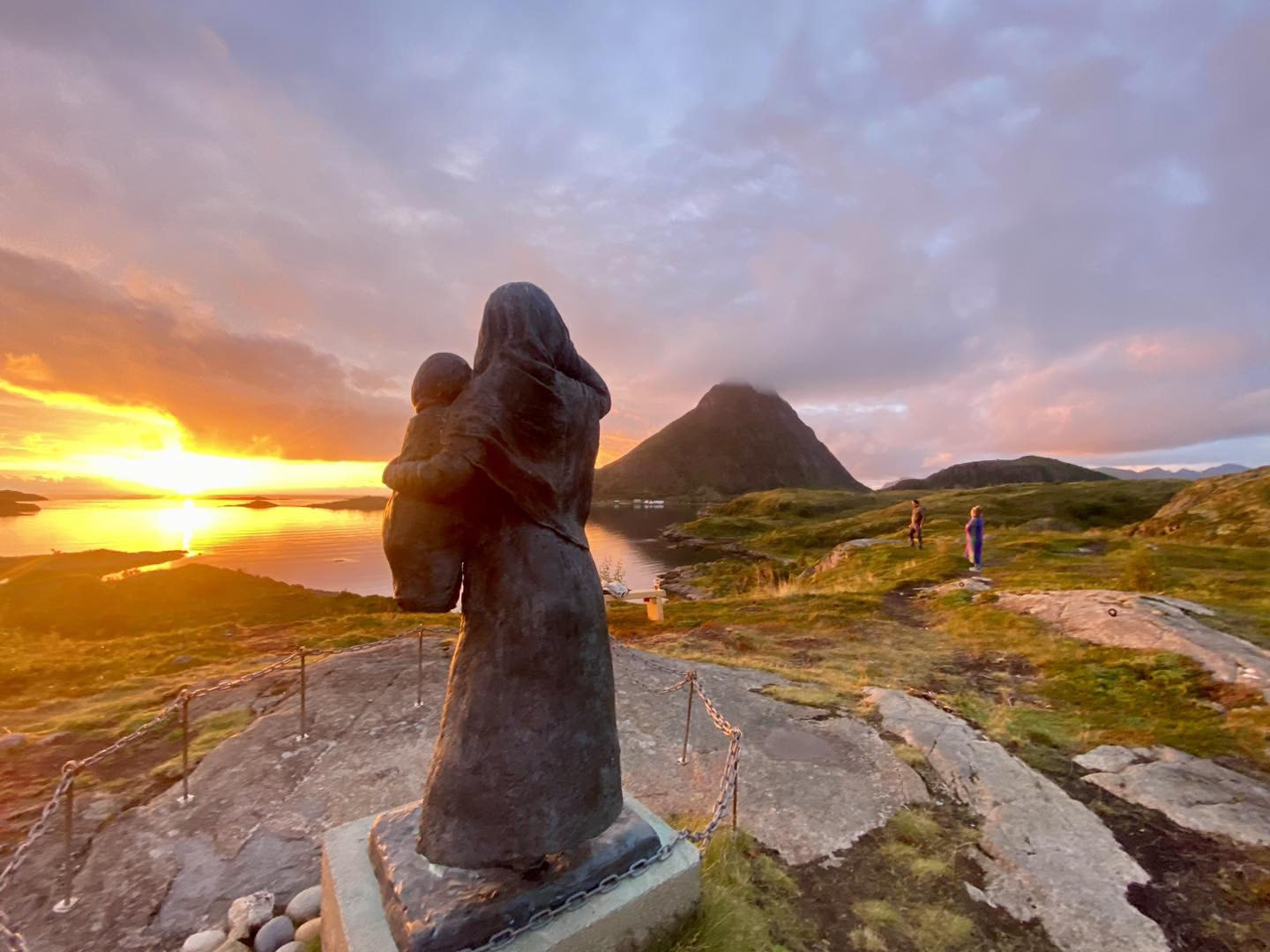
The sea was the men's route, while the women, children and livestock trod the paths on land. Many important messages were delivered on eager children's feet between Skipnes, Tinden, Grinta and Fagervoll or Vinje, Jarbakkan and Ramsvika. That trip probably felt a lot heavier when the message was about distress or death.
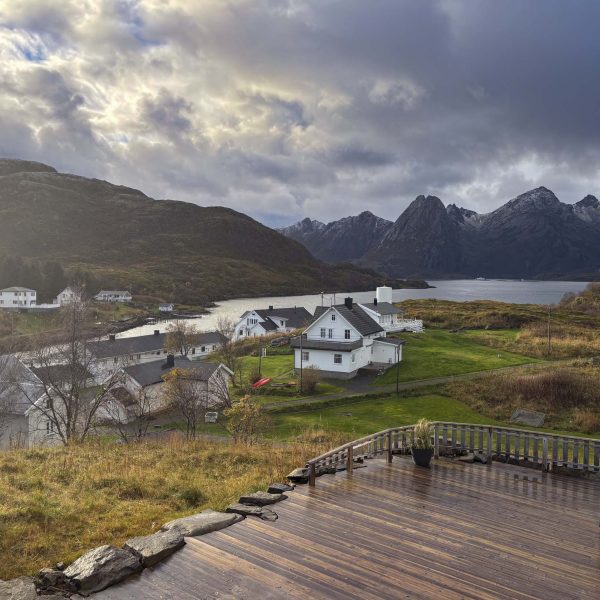
The Tinden trading centre is protected by the Riskantikvaren and has been well cared for. On this tour, you can make a detour to Fagervoll on the north side of Tindstinden to see the old house ruins.
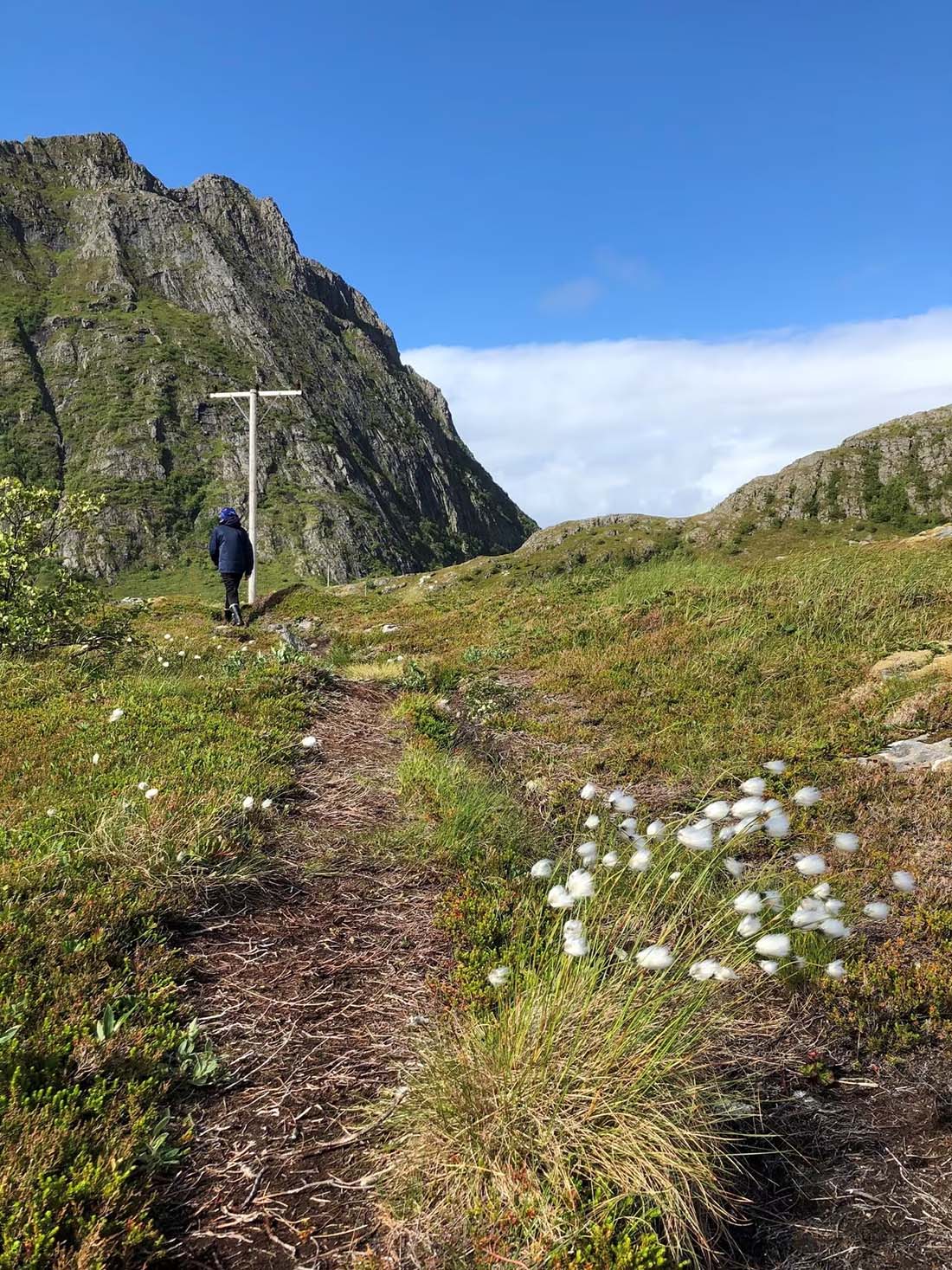
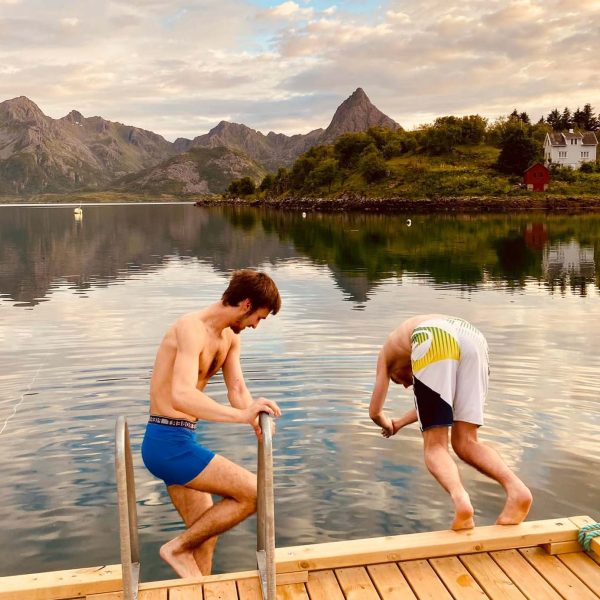
The hike to Vinje is in slightly more hilly terrain on a well-marked trail, with fantastic views of Barkestad on Dyrøya and Finnvågan on Nærøya. The hike includes a slightly steep section, but at a leisurely pace you'll reach your destination in around 40 minutes. On hot, sunny summer days, it's great to take a refreshing dip in Vinjevannet, before continuing on the green plains to Huset på Vinje.
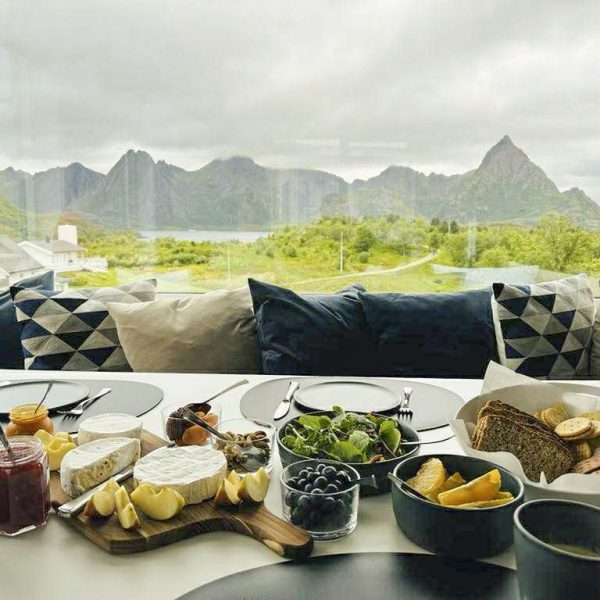
In the old days, this was the home of Anna of Vinje and her descendants. Today, the house has been restored. When you enter, you will immediately feel the cosy atmosphere of the house.
For those who like «top hikes», it's nice to go up to Vedhaugen or Øska on the way to Vinje. The area between Jarbakkan and Ramsvika has an almost magical landscape with large boulders reminiscent of the landscape in Hedgestone in England.
In the old days, St Hans was held at Ershaugen, where young and old gathered to celebrate on a summer's night. Often they built large bonfires so that the smoke was visible from afar. In those days, large smoky bonfires were the proof of a successful St Hans celebration.